
How Redis Will Kill Your Database (And How to Stop It)

On paper, caching looks deceptively simple.
It’s one of the first patterns we learn in backend engineering. You write a few lines of code that look something like this:
Check Cache. If data exists, return it. If not, fetch from DB, set cache, and return.
It feels elegant. It feels efficient. And in a development environment or a low-traffic app, it works perfectly.
But at scale, this logic is a trap.
The hard truth about high-scale systems is that databases rarely die because of bad queries or logic bugs. They die because the cache stopped protecting them. Redis is supposed to be your database’s shield; when that shield cracks, your database doesn’t just get slow—it drowns.
Here are the three ways your cache will betray you, and exactly how to design your system to survive them.
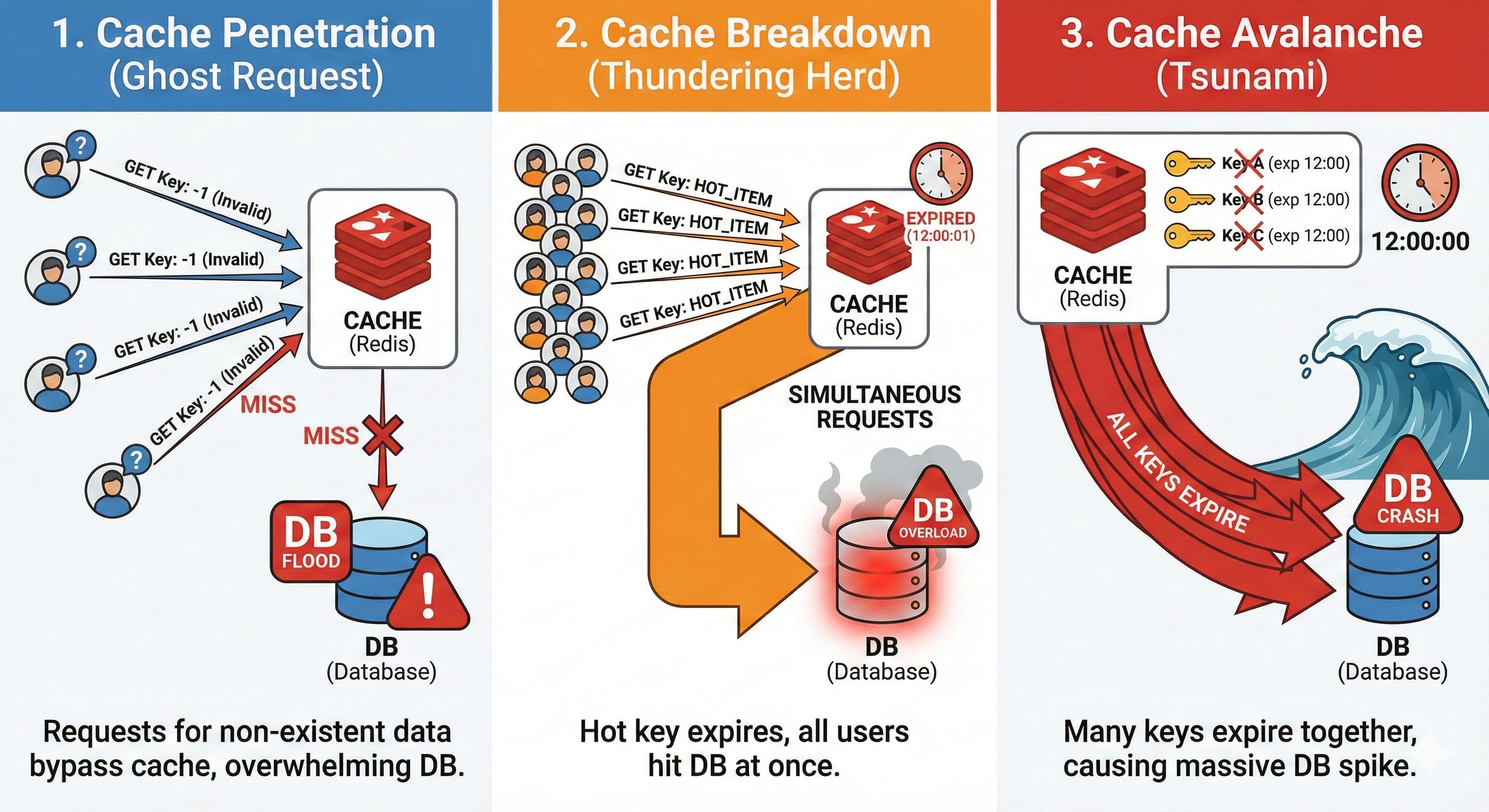
1. Cache Penetration
